 Reader Picks
Seventeen Other Ingredients Carry the Five This Packet Counts.
Liposomal Brain Complex is a five-milliliter sachet of sweetened almond-and-coconut paste from a San Diego company, swallowed without water. I weighed the five named plants against their studies, and against the spoonful that carries them.

This is a paid advertisement. Sponsored by Cymbiotika, LLC.

Franklin Ross is the pen name of this desk.
Everything on this page about the sachet comes from the seller's own product page, the photograph of its official panel, and its published shipping and refund terms, all read on September 20, 2026.
The customers quoted here are real and their reviews are public on the seller's page.
The small portraits beside them are illustrations, not the reviewers.
There is a coffee can on my counter that has held pens since the Clinton administration, and next to it, for the last three weeks, there has been a small flat foil sachet.
It is the size of the ketchup packet you get with a diner breakfast.
Inside it is five milliliters of pale, sweet, spiced paste that you tear open and swallow without water.
That last part is the whole reason I started reading.
Almost everything sold on this subject asks you to get a glass, count something out and swallow it whole.
This one asks you to eat a teaspoon of something that tastes, by every account I read, like vanilla cinnamon almond butter.
It is called Liposomal Brain Complex, it is made by a company called Cymbiotika in San Diego, and a month of it costs about the same as a decent dinner for two.
So the first honest question is not whether it works. It is what, exactly, is on the spoon.
The answer is on the back of the box, in two lists that almost nobody reads side by side.
The first list is the panel the law makes them print, and it has five lines on it.
Rhodiola root, a choline fat from sunflower, bacopa, a standardized kanna extract, and a trace of huperzine A.
The second list is the one underneath, the one headed "Other Ingredients," and it has seventeen things on it.
Glycerin, water, almond butter, coconut nectar, cassava syrup, cocoa extract, sea salt, vanilla powder, vanilla extract, pectin, vitamin E, sodium alginate, calcium lactate, cinnamon, ginger, clove and cardamom.
Seventeen carry the five. That is not a criticism, it is a description, and it is the most useful sentence I can give you before you decide anything.
I have been reading labels on this desk for a while now, and most of them are a capsule of powder with a shell around it.
This is a food, with five named plants stirred into it at amounts you can add up on the back of an envelope.
So this page does two things.
It reads the spoonful as what it is, and then it reads each of the five lines against the study that plant actually comes from.
I will tell you now how it comes out: one of the five sits at exactly the amount of its study, and that study had twenty-one people in it.
The rest is arithmetic, terms and taste, and I would rather you had all three before you spend sixty-two dollars.

What Is Actually on the Spoon
Start with the container, because it tells you more than the front of the box does.
A carton marked as a month's supply holds a row of flat foil sachets, each one holding five milliliters.
Five milliliters is a teaspoon, and a teaspoon of this is what the seller calls one serving.
The panel prints the five named lines and their weights: rhodiola root extract at 100 milligrams, phosphatidylcholine from sunflower lecithin at 60, bacopa whole-plant extract at 50, the kanna extract at 25, and huperzine A at 50 micrograms.
Then it prints the food facts that make this a food and not a capsule.
Twenty calories, under a gram of added sugar, thirty-five milligrams of sodium.
And then, in bold at the bottom of the panel, the line that matters more than any of the rest to some of you.
Contains: Almond and Coconut.
I put that early because a man who cannot have tree nuts has finished reading this page at this line, and I would rather he finished here than three thousand words further down.
The paste itself is built the way a soft confection is built.
Glycerin and water make the base, almond butter gives it the body, coconut nectar and cassava syrup sweeten it, pectin and sodium alginate hold it together, and calcium lactate firms it.
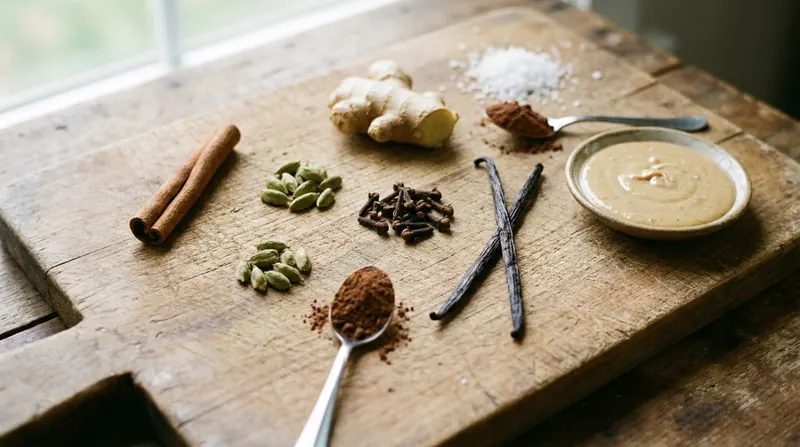
Cocoa extract, sea salt, vanilla in two forms, cinnamon, ginger, clove and cardamom are the flavor.
Vitamin E is in there as a preservative for the fats, which is what vitamin E does in almost every jar of nut butter in your pantry.
The label says the flavor is vanilla cinnamon, and every review that mentions the taste, good or bad, is arguing about that flavor.
Nobody in fifteen hundred reviews argues about whether it is hard to swallow, because it is a spoonful of sweet paste.
What you are buying, physically, is a daily teaspoon of spiced almond confection with five plant extracts stirred through it.
Once you see it that way, the next question follows on its own, and it is the question I built the middle of this page around.
How much of the teaspoon is the supplement?
How Much of the Teaspoon Is the Supplement
Add the five printed weights together and you get two hundred and thirty-five milligrams, plus the fifty micrograms of huperzine A, which is five hundredths of a milligram.
Call it 235 milligrams of named plant material in a five-milliliter spoonful.
Everything else in that spoonful, by weight, is the almond butter, the water, the glycerin, the two sweeteners and the spices.
A quarter of a gram of botanicals, in a teaspoon of something that tastes like dessert.
I am not saying that to be unkind.
A quarter of a gram is a real amount of plant extract, and most sprays I have read on this desk deliver a hundredth of it.
But it does answer a question men ask me constantly, which is whether the sweet stuff is "in the way" of the active stuff.
It is not in the way; it is the delivery, and the makers of this thing would tell you that in the same words.
The paste is the reason you can take it without water, which is the reason a lot of people buy it in the first place.
If you have ever stood at a sink at six in the morning trying to get a horse-sized capsule down, you know exactly what that is worth.
The trade you make for that convenience is calories, sugar and a sweet taste first thing in the morning.
Twenty calories and under a gram of sugar is a trivial trade for most men, and a real one for a few.
If you are counting every gram of added sugar for a reason, count this one too. It is small, but it is there, and the seller prints it plainly.
The other trade is price per milligram, which I will come back to when I read the terms.
Paste costs more to make and more to ship than powder in a shell, and you are paying for it.

The Word on the Front of the Box
The front says "Liposomal," and that word does a lot of work in this category.
A liposome is a tiny bubble of the same kind of fat your cell walls are made of, and the idea is that a nutrient wrapped in one survives the trip better than a nutrient that is not.
That is a real idea in pharmacy, and it is a real word, and it has also become a marketing word on a great many labels.
Here is where I landed after reading the seller's page carefully.
The company uses the word, describes the delivery in general terms, and does not put a study of this product's absorption in front of you.
So I read it the way I read every unmeasured word on a front panel.
It is a claim about the form, not a number on the panel, and I did not let it change a single line of the arithmetic on this page.
The phosphatidylcholine in the formula is, as it happens, exactly the sort of fat a liposome is made from, and it is also counted as one of the five named lines.
Whether it is mostly there as a delivery material or mostly there as a choline source is not something the label tells you.
I asked that question honestly and I could not answer it from the published material, so I am leaving it open rather than guessing.
When a page tells you it does not know something, that is usually the most reliable sentence on it.
Read the five weights. Do not read the front panel.
Line One: Rhodiola Root, 100 Milligrams
Rhodiola is the biggest number on the panel, and it is the one plant on it that a lot of men have already heard of.
It is a tough little plant of cold, high places, called golden root or arctic root, grown and harvested across Scandinavia, Russia and the high parts of Asia.
The root is the part used, and it has a long history of use in those countries by people doing hard work in hard conditions.
The study most often cited for it is a crossover trial in fifty-six healthy young physicians working night shifts, who took one tablet a day of a standardized extract.
Over the first two weeks their scores on tests of mental tiredness came out better than on placebo. [1]
I want you to notice two things about that sentence.
The people were young physicians on night duty, and the effect was measured over two weeks.
Nobody in that study was sixty-four years old and sitting in his own kitchen at seven in the morning.
The national health agency that reviews this sort of thing states plainly that there is not enough reliable evidence to say whether rhodiola is useful for any health-related purpose.
That is their sentence, not mine, and I put it here because it is the fairest summary available.
So what do you do with 100 milligrams of it in a teaspoon of almond paste?
You read it as the largest, best-known line on a panel whose best study was run in a different kind of person under a different kind of pressure.
Rhodiola is also the line most likely to be felt as something, for better or worse.
Reported side effects in the material I read include dizziness, headache, trouble sleeping and a dry mouth.
If you take anything daily, this is one of the two lines on this panel I would read out loud to a pharmacist before the first sachet.
The other one is four paragraphs down.

Line Two: Bacopa, 50 Milligrams Against 300
This is the line where the arithmetic gets uncomfortable, and it is also the line with the best evidence in men our age.
Bacopa monnieri is a low creeping plant of wet ground and pond edges across India, with small oblong leaves and pale flowers.
It is one of the most studied plants in this whole field, and unusually, it has been studied in the right people.
In fifty-four healthy adults aged sixty-five and over, three hundred milligrams a day of a standardized extract for twelve weeks came out ahead of placebo on delayed word recall and on a task of ignoring distractions. [2]
In ninety-eight healthy adults over fifty-five, the same daily amount for twelve weeks came out ahead on verbal learning and delayed recall. [3]
A pooled analysis of nine such trials found faster performance on two attention-speed measures, by milliseconds, and its authors asked for a large well-designed trial that still has not happened. [4]
Now the number on this panel.
Fifty milligrams.
One sixth of the amount every one of those trials used.
I have no way to tell you whether a sixth of a dose does a sixth of something, nothing at all, or something that nobody has measured.
Nobody does, because the trials were run at 300 and the panel prints 50.
What I can tell you is that it is not the same thing, and that a page that quoted those trials next to this number without saying so would be misleading you.
So: good plant, right age group, real trials, one sixth of the amount.
The other thing worth knowing about bacopa is that the trials reported more stomach upset, looser stools and cramps than placebo. [3]
At a sixth of the dose that is less likely, but if your gut is the part of you that complains first, that is the line to watch.

Line Three: Twenty-Five Milligrams of a South African Succulent
This is the line the seller is proudest of, and the one I spent the longest on.
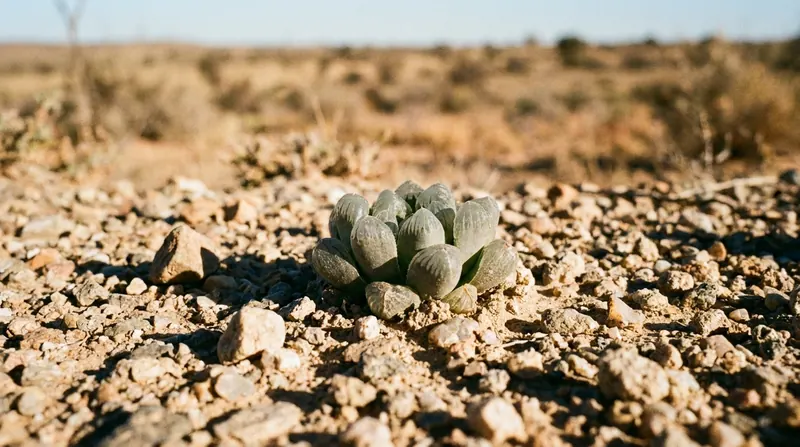
Kanna is a small succulent from the dry western parts of South Africa, where its dried leaves and stems have been chewed and brewed for centuries by the Khoi and San peoples.
The standardized extract sold to supplement makers under the Zembrin name is the form in this sachet, at twenty-five milligrams.
Here is the important part, and it is genuinely interesting.
Twenty-five milligrams is exactly the amount used in the study behind it.
That study was a randomized, double-blind, placebo-controlled crossover trial: three weeks on the extract, three weeks on placebo, in twenty-one healthy adults with an average age of about fifty-four and a half.
On a computerized battery, two measures came out better on the extract than on placebo. [5]
Twenty-one people. Three weeks.
Two measures out of a battery of many, and authors who included people connected to the maker of the extract.
That is a first study, not a track record, and the difference matters.
I say that having read a great many labels where the printed amount was a fraction of the trial's amount.
This one matches, and a match deserves to be said out loud even when the trial behind it is small.
The other thing you need to know about kanna is not about evidence at all.
It acts on brain chemistry in a way that almost nothing else on a supplement shelf does, which is why its own label tells you to check before combining it with anything you take daily.
If you take anything daily, this is the line to read out loud at the pharmacy counter before you open the first sachet.
I am not telling you it is dangerous, and the study reported it as well tolerated.
I am telling you it is the one line here that behaves more like a compound than like a food, and it deserves a ten-second conversation you are going to have anyway.
Line Four: Fifty Micrograms, and Why the Unit Changed
Four lines on this panel are printed in milligrams and one is printed in micrograms, and that change of unit is the whole story of the line.
Huperzine A is not a plant extract in the ordinary sense.
It is a single purified compound, isolated from a Chinese club moss, and it slows the enzyme that clears a particular messenger chemical out of the nervous system.
In other words, it works the way a compound works, not the way a food works, and fifty micrograms is a twentieth of a milligram.
The human study I can hand you gave healthy adults a single dose of either one hundred or two hundred micrograms, twelve people to a group.
Both doses measurably slowed that enzyme in the blood; the 200-microgram dose held declarative recall steady across the sessions, and neither dose improved overall performance. [6]
So the trial's smaller dose was twice what is in this sachet, and the trial's larger dose was four times it.
And the honest read of that trial is that it moved a blood measurement more convincingly than it moved a person's scores.
Most of the rest of the research on this compound has been done in people with a named condition, which is not what this page or this product is about, so I am not citing it.
Because it acts on that enzyme, it can bring the sort of effects that acting on that enzyme brings: nausea, sweating, a slow heartbeat, muscle twitching.
At fifty micrograms those are unlikely, and I have seen no reviews describing them.
But it adds to the effect of anything else that acts on the same system, which is the second reason for the pharmacy conversation.
Two lines on a five-line panel, one plant and one compound, both of which belong in that conversation.
Line Five: Sixty Milligrams of a Fat From Sunflowers
The last line is the quietest, and it is the one most likely to be doing two jobs at once.
Phosphatidylcholine is the main fat-and-choline molecule in cell membranes and in lecithin, the emulsifier in egg yolk, soybeans and sunflower seeds.
This one is from sunflower, which is why the box can say no soy.
As a choline source it is modest: only about thirteen percent of its weight is choline itself.
Sixty milligrams of phosphatidylcholine is therefore roughly eight milligrams of choline, against a daily intake for a grown man that is measured in hundreds.
A few percent of a day's choline, in the same spoonful as the rest.
The evidence I can point to for choline is not a trial of a supplement at all.
In a community cohort of 1,391 adults aged thirty-six to eighty-three, people whose diets carried more choline scored better on verbal and visual memory tests. [7]
That is an association across a population's eating, not a test of a capsule or a sachet.
Two eggs at breakfast carry several times the choline in this packet, and cost about forty cents.
I am not being clever there.
If choline is the reason you were interested in this product, breakfast is a cheaper and better-evidenced route, and I would rather tell you that than sell around it.
Where this line probably earns its place is as part of the delivery, given what the front of the box says the paste is doing.
That is my inference and I will label it as one, because the panel does not say so.
The Five Lines, Added Up
Here is the panel in one breath, in the order that would matter to me if I were standing in my kitchen with the box.
- One line sits at exactly the amount of its study: the kanna, at twenty-five milligrams, from a three-week crossover trial in twenty-one healthy adults averaging about fifty-four. [5]
- One line has the best evidence in men our age and one sixth of the amount that produced it: bacopa, fifty milligrams against the three hundred used for twelve weeks in adults over fifty-five. [2] [3]
- One line is the biggest number on the panel with its best trial run in young physicians on night duty: rhodiola, one hundred milligrams. [1]
- One line is a purified compound at a quarter to a half of the single doses that have been given to healthy adults: huperzine A, fifty micrograms. [6]
- One line is a modest source of a nutrient you get more of from two eggs: phosphatidylcholine, sixty milligrams, about eight milligrams of choline. [7]
Two hundred and thirty-five milligrams in total, carried in a teaspoon of sweetened almond paste with seventeen other things in it.
That is a fair panel, honestly printed, with every weight visible and no blend hiding behind a single total.
I have read a lot of labels this month that could not say as much, and it is worth saying plainly before I start reading the terms.
Nothing on this panel is left out. Everything on it is smaller than its headline, except the one line that is not.
Stirring It Into the Coffee
The label offers two ways to take it: squeeze it into your mouth, or stir it into a drink you already have.
For most men buying this, that second drink is coffee, and I want to say one careful thing about that.
The paste adds nothing caffeinated, so whatever you feel at eight in the morning is the coffee doing what coffee does.
A twelve-ounce cup of brewed coffee carries somewhere in the neighborhood of a hundred and thirty-five milligrams of caffeine, and the federal food agency uses four hundred milligrams a day as the figure not generally associated with negative effects in most healthy adults. [8]
The European safety panel reached the same neighborhood: single doses up to two hundred milligrams and daily intakes up to four hundred do not raise safety concerns in healthy adults, and moderate doses increase alertness and attention. [9]
I put those two sentences in for a practical reason, not a scientific one.
If you start a sachet on the same morning you go from two cups to three, you will never know which one you are feeling.
That is the single most common way men waste sixty-two dollars on a test like this.
Change one thing at a time, and let the coffee stay exactly where it was.
On taste: stirring it into coffee is what the people who dislike the sweetness end up doing.
Straight from the sachet it is a spoonful of candy; in a mug of black coffee it is a spoonful of sweetener you barely notice.

What a Month Costs, and the Number the Box Does Not Print
The one-time price on the seller's own page is sixty-two dollars for a carton described as a month's supply.
Here is the odd part, and I checked it twice.
The carton is described as a month, but the seller does not print anywhere on that page how many sachets are inside it.
The product code the store uses ends in a number that suggests twenty-six, and twenty-six is a plausible count for a carton like this.
But a code is not a label, so this page will not tell you the number as if it were one.
A month's box that does not say how many mornings are in the month is a small thing, and it is still a thing.
If it is twenty-six sachets, sixty-two dollars is about two dollars and thirty-eight cents a morning.
If it is thirty, it is about two dollars and seven cents a morning.
Either way, call it two dollars a day, which is a cup of coffee at a gas station and rather less than one at a counter with a barista behind it.
That is the honest frame for the price, and whether it is worth two dollars is a question only you can answer.
There is a subscription price of fifty-five dollars eighty on the same page, and it is announced with a large "30% off."
Fifty-five eighty is ten percent below sixty-two, not thirty.
I do not know what that thirty percent is measured against, and the page does not say. I am telling you the two numbers so you can do the subtraction yourself at the checkout.
That is not fraud and I am not calling it that.
It is the sort of loose number that appears on a hundred store pages, and the answer is to read the two prices side by side before you click, which takes four seconds.
Sixty Days, One Product, One Household
The refund terms are the most generous-sounding thing on the seller's site and also the most conditional, so read this section twice if you read nothing else.
The written promise is this: if you are not completely satisfied with your first Cymbiotika product, you may request a refund within sixty days of the purchase date, with no questions asked and with no need to send the product back.
That last clause is genuinely unusual, and I will say so.
Most sellers in this field want the unopened portion back, at your cost, in the original carton.
This one does not, which means you can open the box, take it for six weeks and still ask.
Now the three conditions, each of which I would want printed on my receipt.
- It applies to your first Cymbiotika product only, not to a second box of this one and not to anything else you buy later.
- It applies once per customer and once per household, which is their wording, not mine.
- It applies to purchases made directly on the seller's own site, and orders sent outside the United States are excluded.
So: sixty days, opened, no return shipping, once.
That is a real offer with a hard edge, and the hard edge is the word "first."
It also means something specific about how you should buy.
If you are going to test this at all, buy the box you intend to test, test it properly, and make your decision inside the sixty days, because the door closes behind you.
Put the purchase date on the kitchen calendar the day the box arrives. Sixty days from that date is your deadline, and nobody is going to remind you.
The company also states that shipping costs nothing across its site, which takes one variable out of the arithmetic.
It ships within the United States and to many countries outside it, with a short list of exceptions, and this page is written for American readers.

What Fifteen Hundred People Actually Argue About
The seller's page carries 1,563 reviews with an average of 4.9, and the shape of that number is worth a paragraph on its own.
1,433 of them are at five stars, 106 at four, 16 at three, 3 at two and 5 at one.
That is an extremely top-heavy distribution, and top-heavy distributions on a seller's own page always deserve a raised eyebrow.
So I read the most recent thirty of them, kept the ones carrying the store's purchase mark, and deliberately kept the unhappy ones.
I also threw out every review that talked about how the product made someone feel in ways this page does not discuss, because that is not what I can stand behind.
What is left is a small, useful pile, and the striking thing about it is what the disagreement is about.
It is not about whether the sachet is hard to take or whether the box arrived. It is about the taste.
Fifteen hundred people agree on almost everything, and the ones who disagree are arguing about sugar.

I've been taking this for a few months, I always give it a good 3 months before discontinuing something to get a true reading on the product & I truly feel more clear headed & less foggy during my day. I am going to stick with it!

My husband has been taking Brain Complex for almost a month. I see a difference in his cognition. He says he likes the taste and I like the results.

I've been using this formula for the last 6 months and have noticed a huge difference in my ability to concentrate and think deeper and sharper.

I haven't feel or seen any result so far, I like the taste though. Shipping is expensive.

DISGUSTINGLY SWEET. Do not bother
I have quoted the one-star review in full because it is one sentence long and because it is the most useful review on the page.
A woman paid sixty-two dollars, found the taste unbearable and said so in four words.
That is a real risk of this product and it is not a small one.
If you are a man who takes his coffee black and finds most sweet things cloying, there is a live chance you will open the first sachet and think exactly what she thought.
Notice also what Jamie S. wrote at the top of her review, before anything else.
She gives a thing three months before she decides, which is a better testing habit than most of what I read.
And notice Daryl C., who liked the taste, saw nothing at all, and said both.
A page that showed you only the first three of these reviews would be a worse page.
Reviews tell you about delivery, taste and whether people stayed. They do not tell you what a plant did inside anyone, and no number of them ever will.

Who Makes It, and Where You Would Send a Letter
This part is short because it is a list of facts, and it is the part of a page that decides whether the rest of it is worth reading.
The seller is Cymbiotika, LLC, and the legal address printed in its own terms is 5825 Oberlin Drive, Suite 5, San Diego, California.
The telephone number on the site is (855) 983-8888, answered weekdays, eight to five Pacific time, and the general email address is info@cymbiotika.com.
The label states the product is made in the United States, that it is vegan, and that it contains no gluten and no soy.
The company states that each batch is screened for microbial contaminants and for heavy metals by a third-party laboratory.
Those are claims by the seller, and I am printing them as such.
What they tell you is not that the product works; they tell you who you would be dealing with and whether that person can be found.
A street address, a telephone that a person answers and a printed panel with every weight on it. That is the floor, and a surprising number of sellers in this field do not clear it.
This one also sells through other channels, including large online marketplaces and some physical stores.
The sixty-day refund promise applies only to purchases made on the company's own site, which is a good reason to buy it there if you are buying it to test it.

The Cheaper Explanations, and I Mean Cheaper
Before any sachet, there are three things that cost nothing and that I have watched change a man's mornings more than anything on a supplement shelf.
The first is water.
In a study of 1,111 adults aged sixty to eighty-nine, the third of them who were measurably short of fluid slipped faster on a processing-speed test than the rest. [10]
A review of eighteen studies covering 33,707 adults over sixty reached the same general place: being short of fluid in later life tracks with worse outcomes across the board, and with poorer scores on tests of thinking. [11]
Neither of those is a trial of a product, and both of them cost nothing to act on tomorrow morning.
The second is the shape of what you eat.
In a Brazilian cohort of 10,775 adults followed for a median of eight years, the people eating the most heavily processed food lost ground faster on tests of memory and word-finding than the people eating the least. [12]
And in a three-year randomized trial of 604 older adults, a Mediterranean-style eating pattern and a mildly calorie-restricted control diet both improved scores, with no difference between them. [13]
Read those two together and the lesson is about the overall pattern, not about any one food.
Water, the pattern of the plate, and enough sleep, before two dollars a morning.
The third is the hour of the day.
Most of the men who tell me their afternoons are hazy are describing an afternoon, and an afternoon is a different problem from a morning.
A sachet taken at seven does not tell you anything about four o'clock unless you were paying attention at four o'clock before you started.
Which brings me to the only part of this page that will actually change your result.

How I Would Test One Box, If I Were Testing It
If you buy this, buy one carton and run it as an experiment with a deadline, because the refund terms have already set the deadline for you.
Write the purchase date on the calendar and count sixty days forward.
Then set the rules before the box arrives, because rules you set afterwards are not rules.
- One sachet, at the same hour, every morning, in the same drink or in no drink at all.
- Nothing else new for the whole test: not a second supplement, not a third cup of coffee, not a new bedtime.
- One line a day in a pocket notebook, written at the same time each evening, about the same two things.
- Pick your two things in advance and keep them small: the names of people at the counter, and the four o'clock hour.
- Take the photograph of the panel on your phone the day it arrives, so the pharmacy conversation takes ninety seconds instead of nine minutes.
Four weeks is a fair first look and twelve is a fair verdict, which is roughly what Jamie S. said in her review before she said anything else.
The trials behind the two best lines on this panel ran for twelve weeks, and none of them measured anything at all at week one.
The reason to write a line a day is not sentiment.
Nobody can remember in November what their afternoons were like in September, and a notebook can.
And if the taste beats you on the second morning, that is a result too, and it arrived cheaply.
Ask for the refund inside the window, note that the sweetness was the problem, and move on with your sixty-two dollars.

Where It Is Sold, and What That Buys You
The company sells it on its own site, and that is the only place this page sends you.
Buying it there is not loyalty to the seller, it is arithmetic.
The sixty-day promise attaches to purchases made on that site and not to the same carton bought through a marketplace.
If you are buying this to test it, the refund window is half of what you are paying for, so buy it where the window exists.
That is the whole of my advice on where to click.
The Version of This Page I Would Read Out Loud
Here is the entire thing in the order I would say it across a kitchen table, with nothing left out that matters.
- A carton of flat foil sachets from Cymbiotika, LLC of San Diego; one sachet is five milliliters of sweetened almond-and-coconut paste, taken straight or stirred into a drink.
- The panel prints five lines that add to 235 milligrams; the list below it prints seventeen other ingredients, which are the paste, the sweetness and the spice.
- Twenty calories, under a gram of added sugar, thirty-five milligrams of sodium, and contains almond and coconut in bold at the foot of the panel.
- Kanna at twenty-five milligrams is the one line that matches its study exactly; that study ran three weeks in twenty-one healthy adults averaging about fifty-four, on a computerized battery, with the extract maker's people among the authors. [5]
- Bacopa at fifty milligrams is one sixth of the three hundred used for twelve weeks in adults over fifty-five, which is the best evidence in the right age group on this whole panel. [2] [3] [4]
- Rhodiola at one hundred milligrams is the biggest number, and its best trial ran in fifty-six young physicians on night duty for two weeks. [1]
- Huperzine A at fifty micrograms is a purified compound at a quarter of the larger single dose given to healthy adults, where it moved a blood measure more than it moved performance. [6]
- Phosphatidylcholine at sixty milligrams is about eight milligrams of choline, a few percent of a day, and the evidence for choline is dietary and observational. [7]
- Two lines on this panel belong in a ten-second conversation at a pharmacy counter before the first sachet: the kanna and the huperzine A.
- "Liposomal" is a word on the front panel with no absorption figure behind it on the seller's page, and it changed none of the arithmetic above.
- Sixty-two dollars for a carton called a month, with the number of sachets not printed anywhere; a subscription price of $55.80 announced as thirty percent off is ten percent off.
- Sixty days to ask for the money back on your first Cymbiotika product, opened, nothing returned, once per household, own site only, not on orders sent abroad.
- 1,563 reviews averaging 4.9, five of them quoted here including a three-star and a one-star, and the only real disagreement among them is about how sweet it is.
- Before any of it: water, the shape of what you eat, and the hour you are actually asking about. [10] [11] [12] [13]
Every ingredient in the sachet, named lines and paste alike, with the amount the panel prints and the study behind it where one exists, is written out in the ingredient guide linked at the foot of this page.
That guide also carries the cautions in full, the references and the disclosures this page is required to make.
A month of teaspoons, from the company that makes them

A five-milliliter packet of almond-and-coconut paste with five botanical lines, from a San Diego company, squeezed into the mouth or stirred into coffee once a day.
SEE THE SACHET AND THE PRICESold by Cymbiotika, LLC, San Diego, California · five-milliliter sachets of vanilla-cinnamon paste, one a day, taken without water · sixty days on your first Cymbiotika product, opened, nothing to send back · contains almond and coconut
What men ask me about the sachet
Do I need water with it?
No. You tear the corner and squeeze it into your mouth, or you stir it into a drink you already have.
What does it taste like?
Sweet, with vanilla and cinnamon. The reviews that dislike this product dislike it for exactly that reason.
How many sachets are in a box?
The seller does not print the number on the page. The store's product code suggests twenty-six, and a code is not a label.
Which line on the panel has the best support?
Bacopa has the best evidence in adults over fifty-five, at one sixth of the trial amount. [2] Kanna is the only line at exactly its study's amount, and that study had twenty-one people in it. [5]
Should I ask anyone before I take it?
Yes, if you take anything daily. The kanna acts on brain chemistry and the huperzine A acts on an enzyme in the nervous system. [6]
Can I take it if I avoid tree nuts?
No. The panel says in bold that it contains almond and coconut.
How long before I would know anything?
Four weeks for a first look, twelve for a verdict. The trials behind the two best lines ran twelve weeks.
What exactly does the sixty-day promise cover?
Your first Cymbiotika product, bought on the company's own site, once per household, opened, with nothing to send back. It does not cover a second box or orders sent abroad.
Are the reviews real?
Yes. 1,563 on the seller's page averaging 4.9, read through the store's public review feed, and I quote five including a three-star and a one-star.
What a Teaspoon of Paste Is Actually Worth
Here is the whole thing in one breath.
This is an honestly printed panel on a pleasant piece of food, from a company you can find, with one line at its study's amount and three lines well under theirs.
The study behind that one matching line had twenty-one people in it for three weeks, which is a beginning and not a record.
What you are really buying, over and above the 235 milligrams, is a morning you will actually keep.
A teaspoon of something sweet that needs no water is a habit a man can hold for twelve weeks, and a bottle of capsules by the sink very often is not.
That is not nothing. A supplement you take every morning for three months beats a better one you abandon in nine days, and this page has read a lot of abandoned bottles.
So if you are a man who will not swallow capsules, who wants every weight printed where he can see it, who will ask his pharmacist about two lines and who will write one line a day for a month, this is a fair sixty-two dollars.
If you take your coffee black and hate sweet things, read the one-star review again before you order.
And if what you are really asking about is the four o'clock hour, start with water, the plate and the sleep, because they cost nothing and they are better evidenced than anything on this panel.
One carton, sixty days, and a date on the calendar
A five-milliliter packet of almond-and-coconut paste with five botanical lines, from a San Diego company, squeezed into the mouth or stirred into coffee once a day.
SEE THE SACHET AND THE PRICESold by Cymbiotika, LLC · San Diego, California · one five-milliliter sachet a day · $62 for a carton called a month, shipping at no charge · sixty days on your first Cymbiotika product, once per household, on the company's own site
P.S. If you remember two things from this page, remember these.
Twenty-five milligrams of kanna, the one number here that matches its study, and twenty-one, the number of people in it.
Fifty milligrams of bacopa against the three hundred that produced the results you have read about everywhere else.
P.P.S. If the haze has been with you for a year, and it is there before the coffee as well as after it, talk to your own clinician before you buy anything at all.
A teaspoon of almond paste was never going to answer a question that a clinician answers in fifteen minutes and a blood test.